Day 1
Their own account, handed over at admission.
The client gets twenty-four hours a day of programming. The family gets whatever hour you can staff, and then the client goes home to them.
One treatment CEO puts it in a line: the kid improves fifty percent, the family ten, and the family brings the kid back down thirty.
The account belongs to your facility, not to a client. So it survives discharge, when the family's job starts.
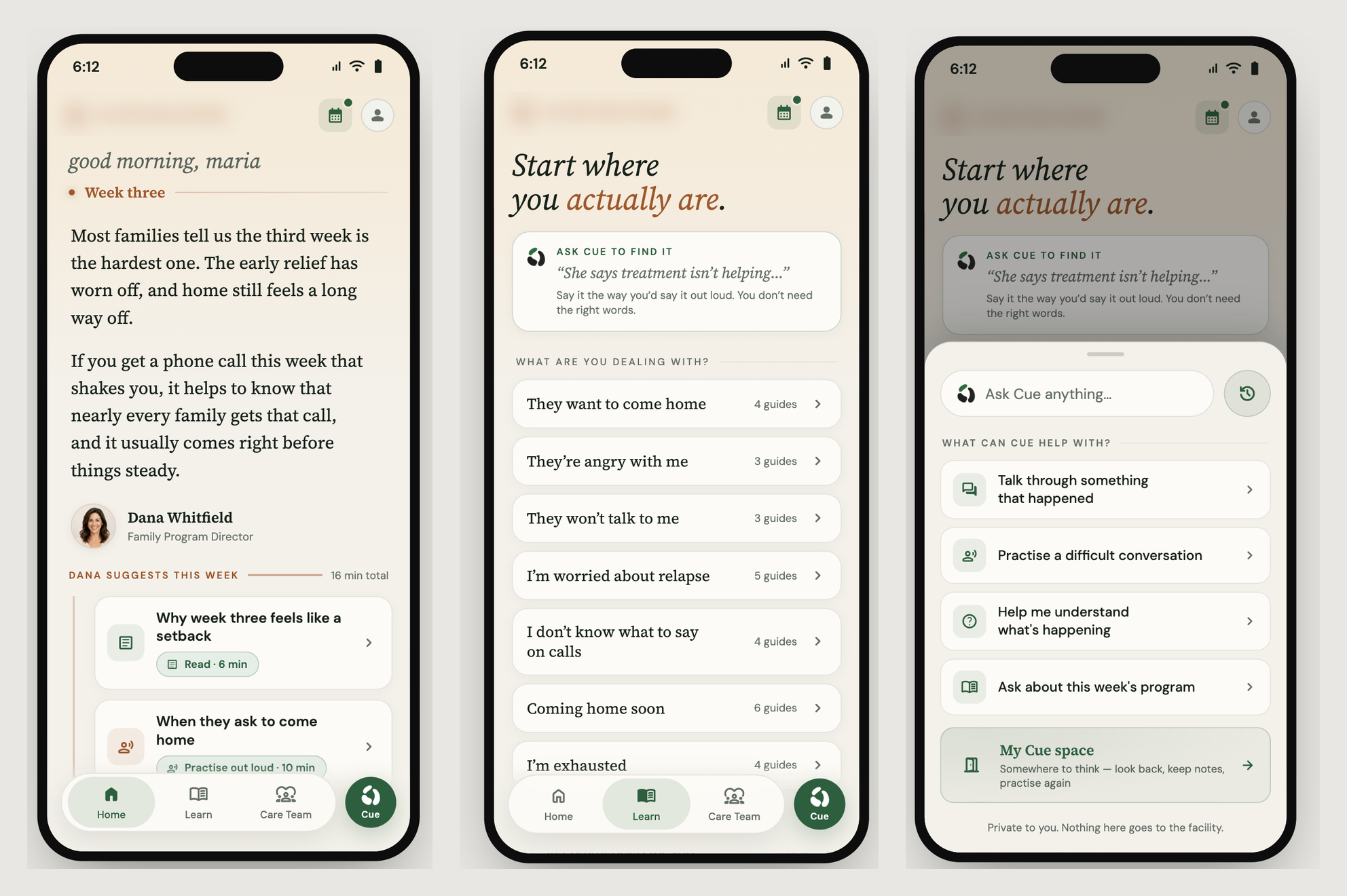
What the program does, and what this stage asks of a family.
What to say when they ask to come home. How to hold a limit.
Your curriculum, your language, on the cadence you choose.
Real RSVPs, in the same place as everything else.
One-to-one and broadcast, with the reply already drafted.
Provider-led and closed. Pseudonymous, unmonitored, and no AI reads it.
Education, rehearsal, and community, on programming you author. Never therapy. Care stays your word.
Everyone assumes a family product means updates about their person. That's the one thing we chose not to build.
Which is why your clinical director can say yes without a call to counsel.
Everything else watches the client for signs a stay is ending early. The family is the party that actually ends it.
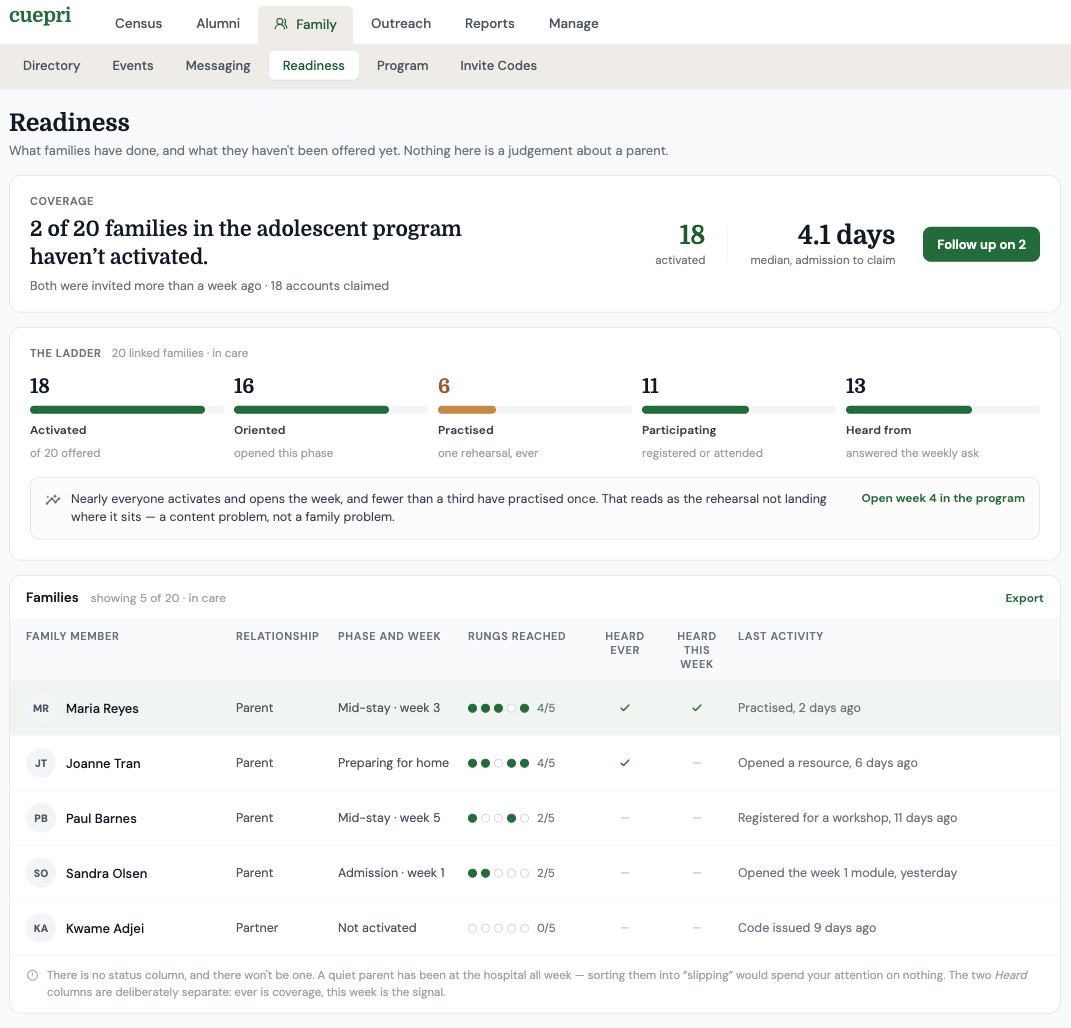
And the family signal is about the family.
Their participation, their own answers. Never a read on the client, and nothing they write is flagged.
Families are only reachable during the stay. Ours works because it sits inside the app your program already runs.
Family is one way in. The same app holds your clients and your alumni too. Alumni & community · The platform
Thirty minutes. The family home, the rehearsal conversations, and the readiness view your director would work in.