Days
To launch, in your own brand.
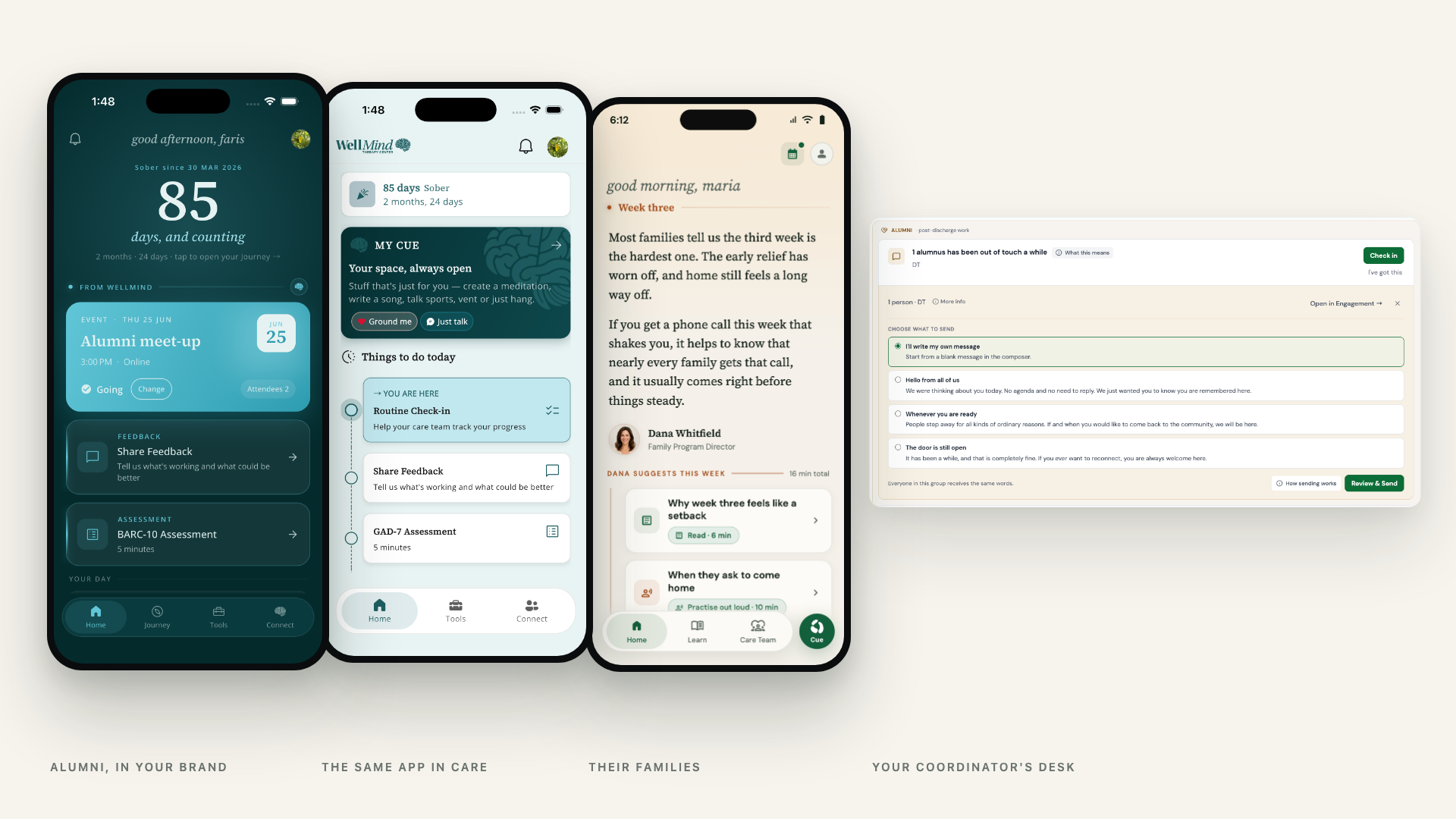
Because it isn't a separate app. Your people have had it since day one of treatment, so at discharge there's nothing to download and no habit to build.
Discharge is the worst moment to ask someone to download something new. However good the features are, it decays.
One system for your whole community: clients in care, their families, and everyone you've discharged.
Your name, your colors, no development timeline and no setup fee.
Two thousand names in a spreadsheet who've never heard of the app. Import with consent, branded campaigns, personal links, printed QR flyers.
Your whole community in one view, sorted so the people slipping surface first. A prompt to send a kind message, not an alarm.
Provider-led and closed. Yours, not an open feed. Members are pseudonymous, the space isn't monitored, and no AI reads it.
Contacts, surveys, and risk flags land in the chart. Plus a follow-up record built for Joint Commission and CARF.
Re-admission opens with their whole story. "I've been wondering how you've been doing."
Same app in care, same app at home, and their families get their own account in it. Nobody else in this category gives the family an account at all.
Disengagement shows up before someone walks, and the authorization narrative assembles from their own words. One operator rolled us out at intake to stop clients leaving early.
What this week looks like, how to hold a limit, and other families going through it. We prepare the family. We don't report to them, and nothing about a client is disclosed by default.
Scored with C-SSRS and routed to your crisis team with context. Never gated, never a module.
A family that goes quiet before a treatment-plan review is the earliest warning in the building, and it's the one population nobody is measuring. How families use it →
94.9% session completion at WellMind, with 24/7 support and crisis detection behind it.
Read the full story →Thirty minutes with Matt. Your brand, your record, your community.